How to play
A shard of five connected cells is buried somewhere in a 6 by 6 dig. Connected means every cell of it touches another on a side, never only at a corner. The shard can be turned or flipped any way, which leaves 1,024 places where it could be. You have six tries to dig it up.
Paint a probe
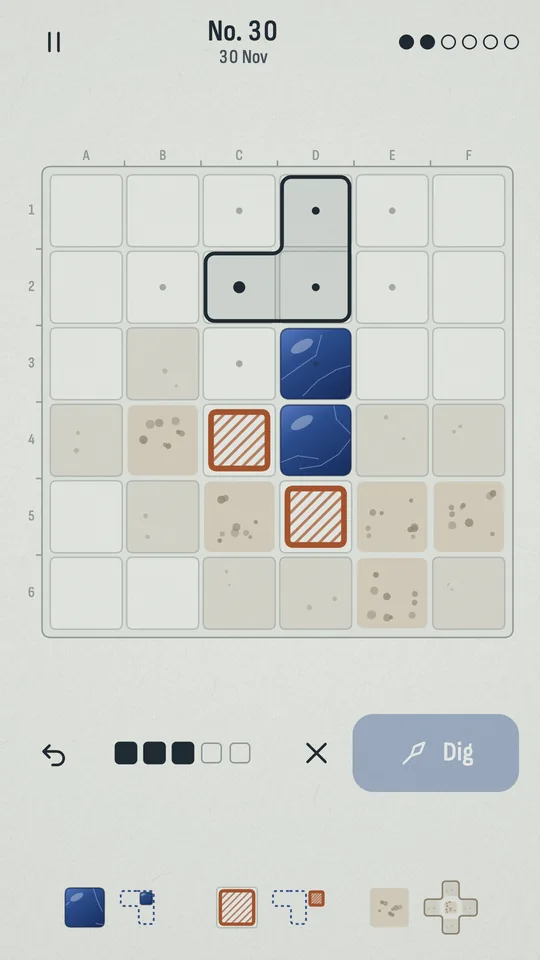
Touch a cell and drag through its neighbours to paint five connected cells, or tap them one at a time. Dragging back onto the last cell takes it off again, and Undo and Clear sit under the board. Dig lights up once exactly five connected cells are painted. Your probe can be any shape at all: it does not have to look like the shard you are hunting.
Read the marks
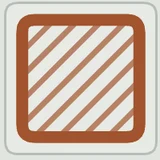
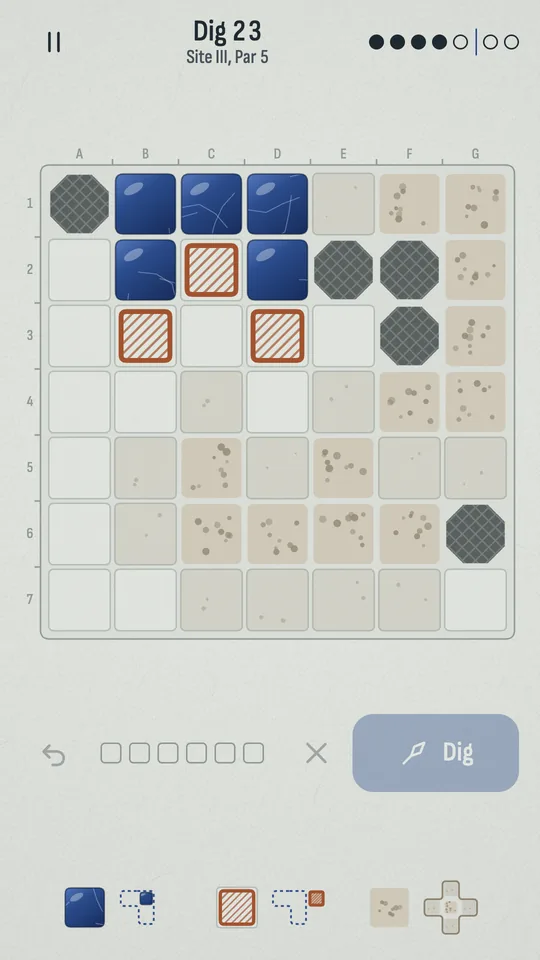
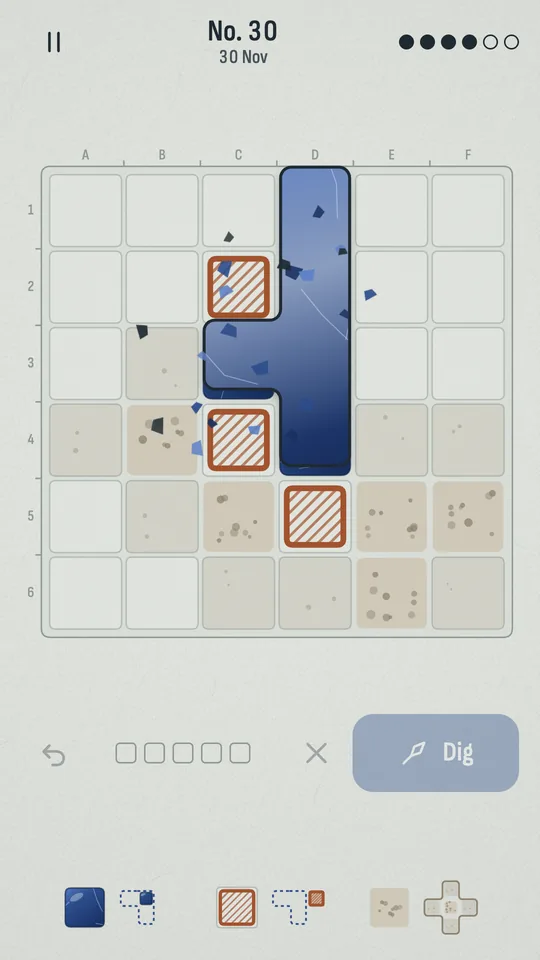
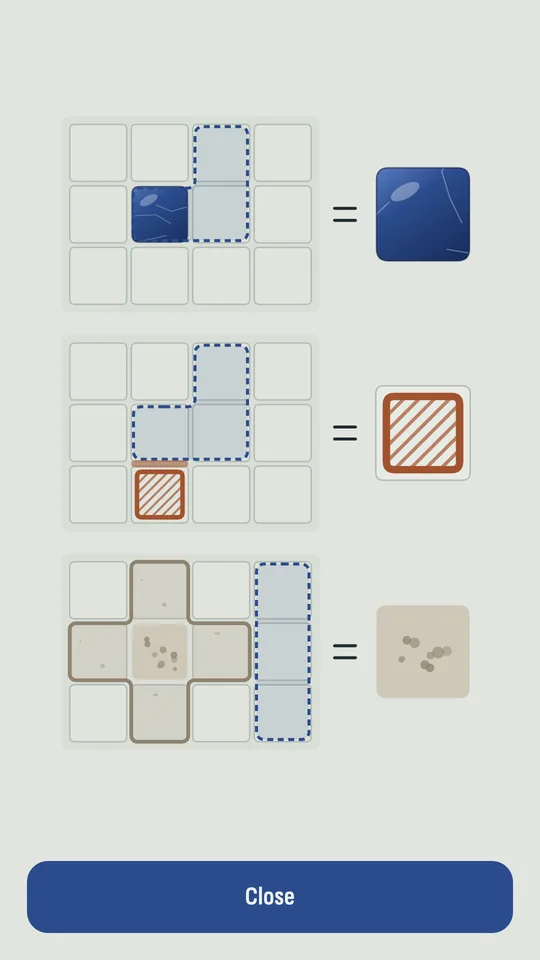
Press Dig and every cell you probed is stamped with a mark. Glaze means that cell belongs to the shard. A hatched rim means the shard is not in that cell but touches it on at least one side; it never says which side. Plain soil means the shard is not there and does not touch it.
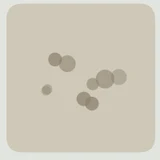
Soil carries more than it seems. If the shard sat in any side neighbour of a soil cell, that cell would have come back as a rim, so soil clears a whole plus shape: the cell and its four neighbours. The board shades those neighbours as sifted soil, so you can see at a glance where the shard cannot be.
Close in
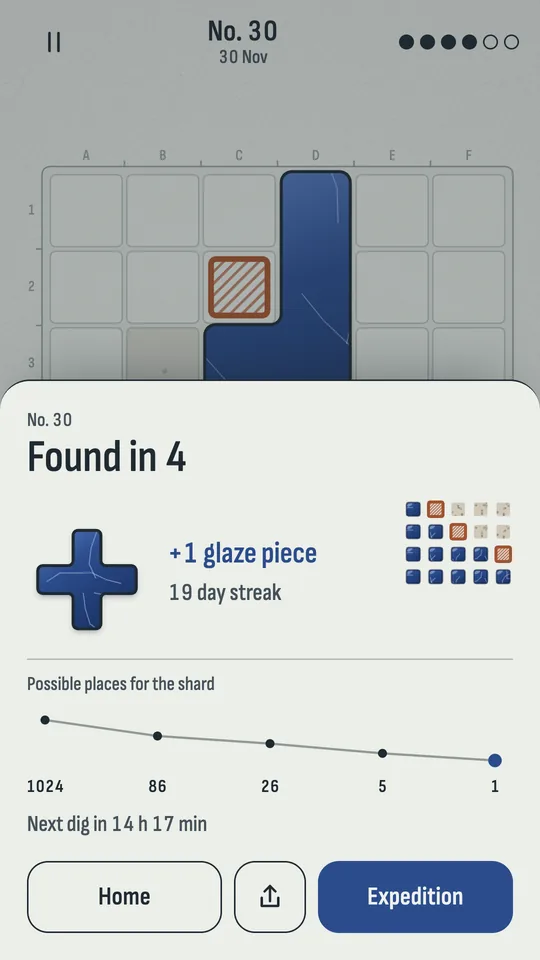
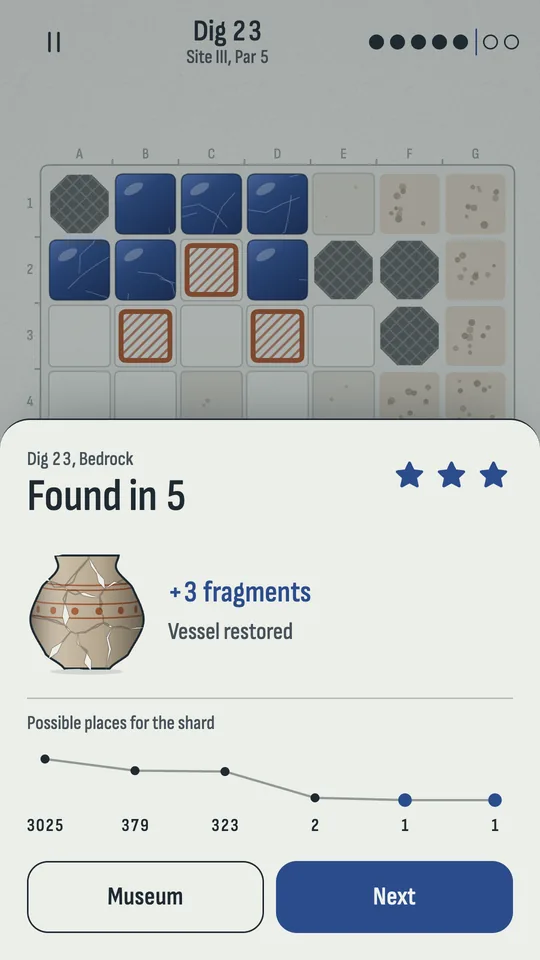
Each try narrows the places the shard could still be. Paint exactly its five cells and it fuses into one glazed piece. The result card draws the narrowing as a line, from 1,024 before your first try down to one, so you can see which try did the most work.
The daily and the Expedition
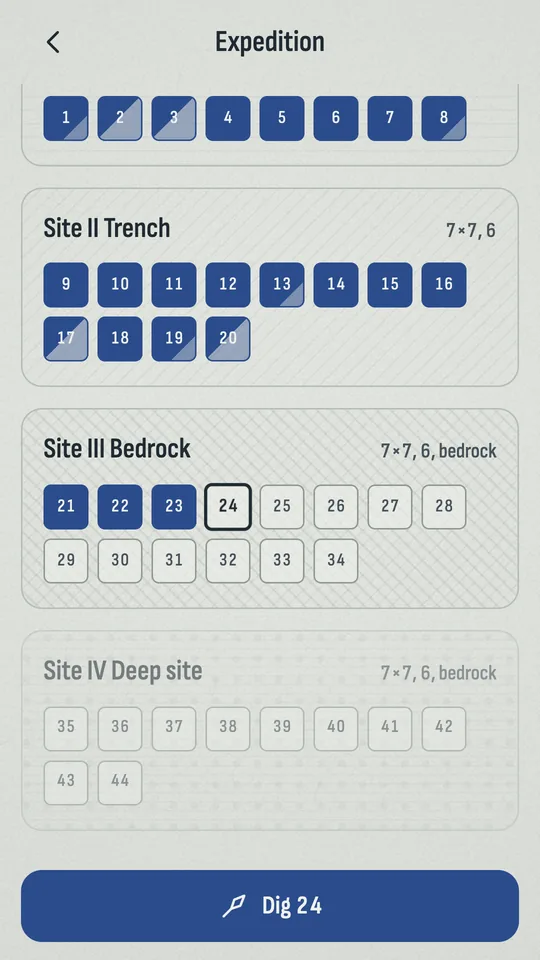
The daily dig is the same 6 by 6 puzzle for everyone on a given date, with six tries. The Expedition is an endless run of digs that grows: the Terrace is 6 by 6, the Trench is 7 by 7 with six cell shards, and Bedrock and the Deep site add rock cells you cannot probe. Expedition digs have a par and give up to three stars.
 Sherd