Act before the air reaches you
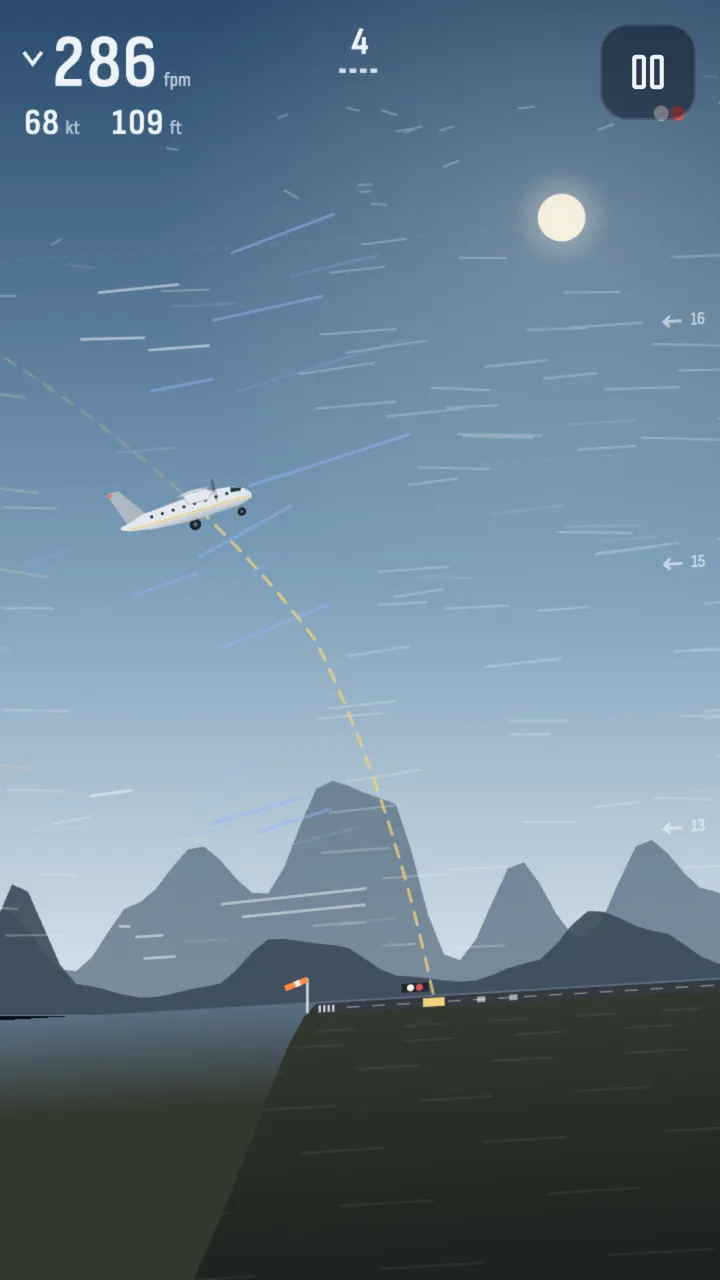
Streaks that tilt down are sinking air. Start holding a little before you fly into them, not when you feel the drop. Streaks that slant up are rising air: let go a little there or you will end up high.
Fly gusts with short presses
Long, bright streaks are a gust. A stronger headwind lifts you for a moment, and when it fades you sink. Small, short presses ride a gust better than one long hold.
Watch the wind numbers
Each layer shows its wind in knots at the right edge. When the bottom number is much smaller than the top one, you will lose a lot of airspeed in the last few feet. Start the flare a little higher and be ready to hold a little longer.
Use the shadow
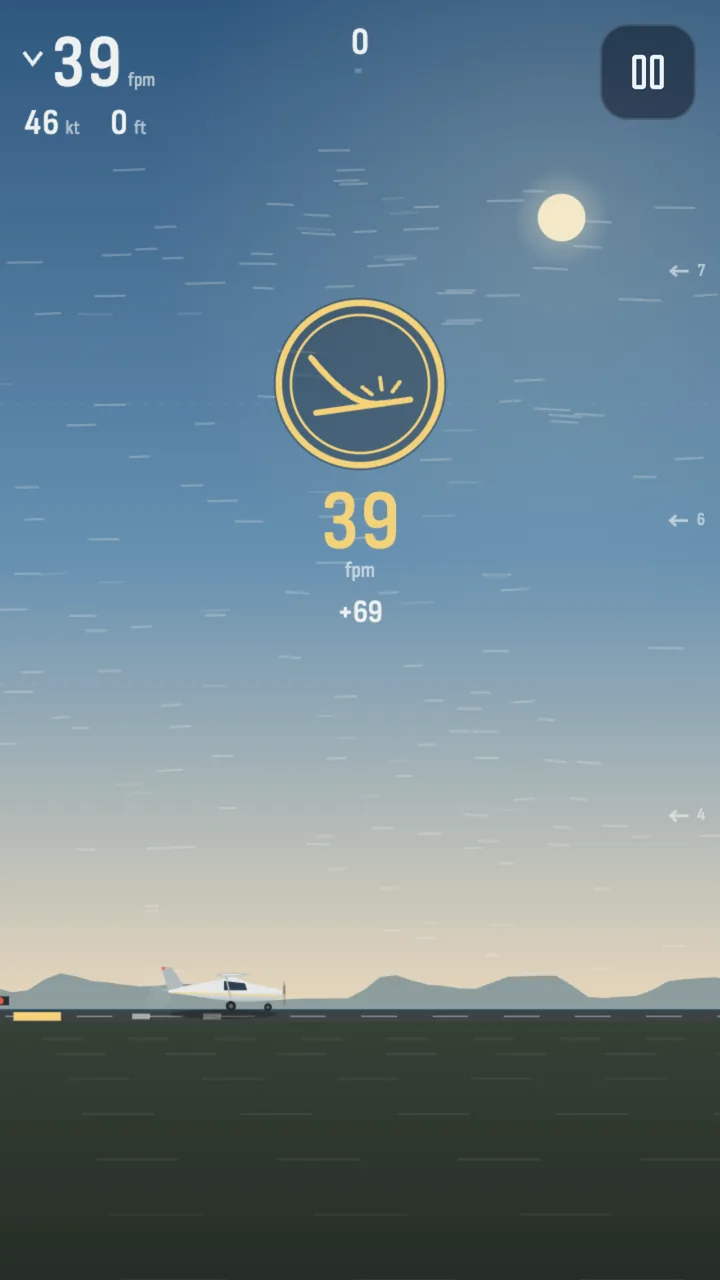
Height is hard to judge from the side. The aircraft's shadow on the ground closes in as you descend, and when it meets the wheels you are about to touch. That is the moment to be holding gently, not starting to.
Ease off when the wing shakes
A shaking wing is the stall warning. Let go as soon as you see it: a firm landing is far better than a stall from ten feet. Holding until the shaking starts and then keeping on holding almost always ends hard.
Aim short in the jet
The regional jet floats a long way in ground effect and raises its nose slowly. Begin the flare earlier than in the other aircraft and aim to touch at the yellow mark, not past it. Leave room to stop: the jet needs most of the runway.
Mind the uphill strip
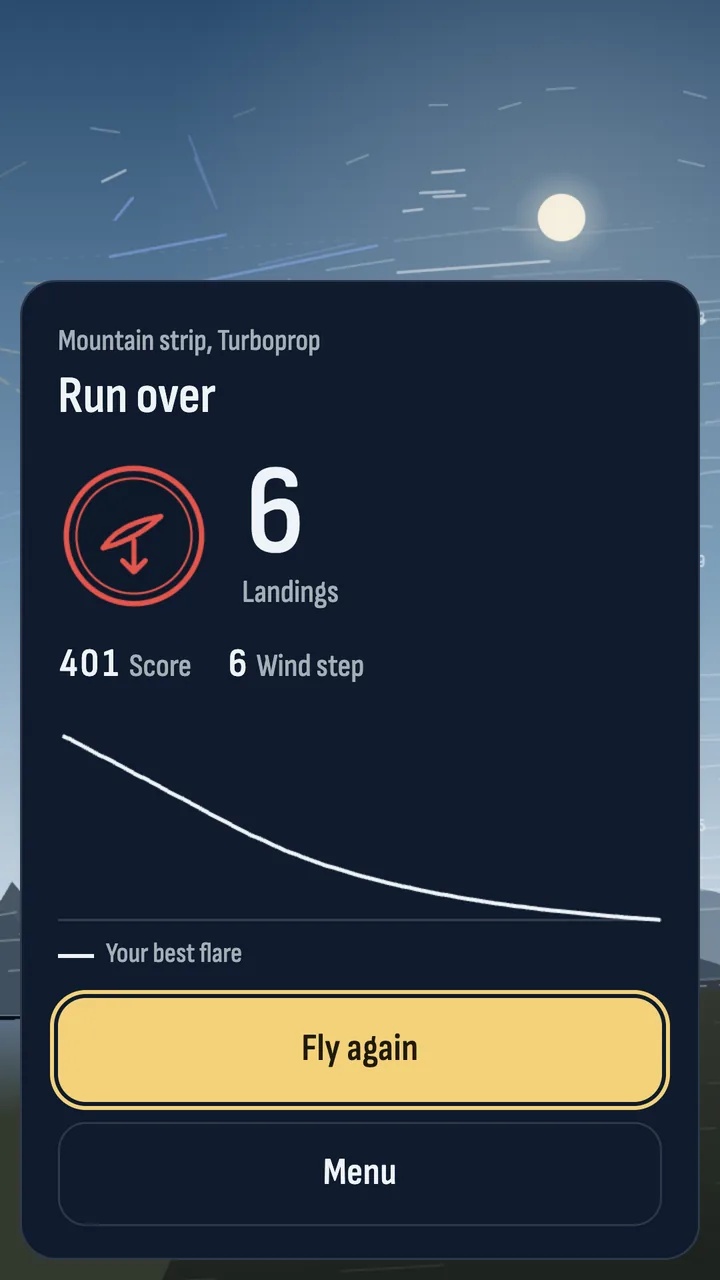
At the mountain strip the runway rises toward you, so it arrives sooner than it looks. Flare a little earlier. Sink rate is measured against the sloping runway, so a landing that looks gentle can still grade firm.
Play the Daily safe
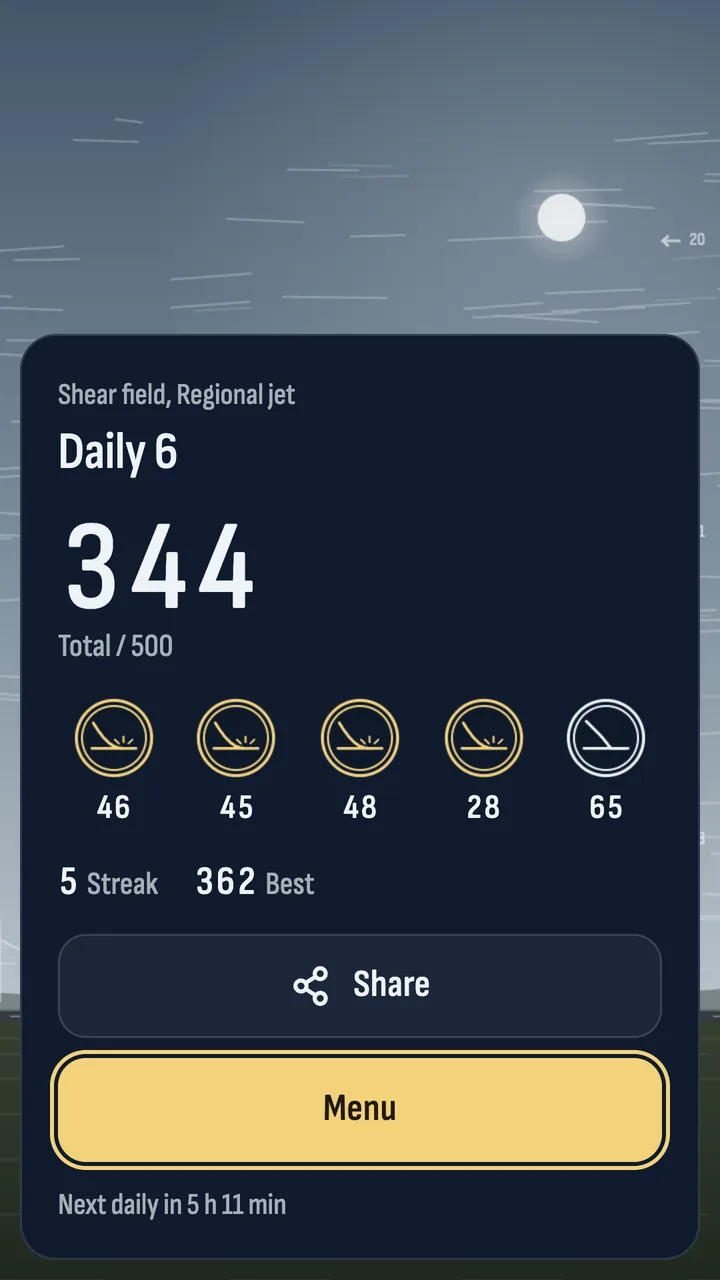
The Daily has no free retry and adds up all five landings. A firm landing on the aim mark scores more than a float down the runway that ends in a bounce. Fly the first approach to learn the day's air, then go for butter.
 Butterline